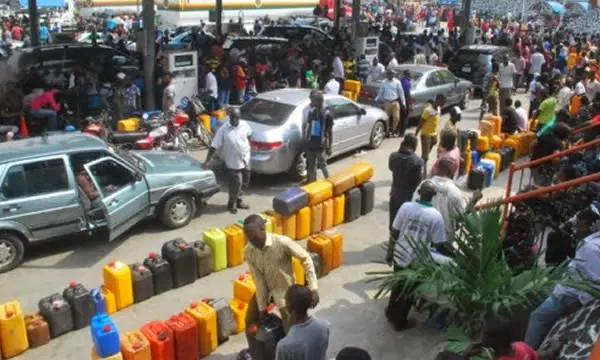
The ongoing petrol scarcity in Nigeria shows no signs of easing, with reports indicating that the situation may persist due to a $6 billion debt owed to petrol suppliers, coupled with a lack of liquidity and other pressing challenges. These issues have significantly hampered the Federal Government’s ability to maintain the importation of petrol.
Oil marketers have also cited the steep foreign exchange rate of $1,500 per dollar, which has driven the landing cost of petrol to over N1,100 per litre, as a major barrier to importing the product.
The Nigeria Employers Consultative Association (NECA) voiced concerns yesterday, noting that the economy continues to face severe challenges. These include volatility in the foreign exchange market, persistently low crude oil production, and a high monetary policy rate, all of which have hindered business activities.
Investigations by Vanguard revealed that key players in the fuel distribution chain have implemented strategies to optimize the distribution of the limited available supply. Under the current system, major marketers, their dealers, and depot owners obtain petrol at approximately N560 per litre and then sell it to independent marketers for between N670 and N680 per litre.
Independent marketers, who bear the transportation costs to various parts of the country, including remote areas, then sell the product to consumers at prices ranging from N700 to N900 per litre, depending on the location.
Long queues were observed at the few filling stations that were open to customers yesterday, while several others, unable to secure supply, remained closed.