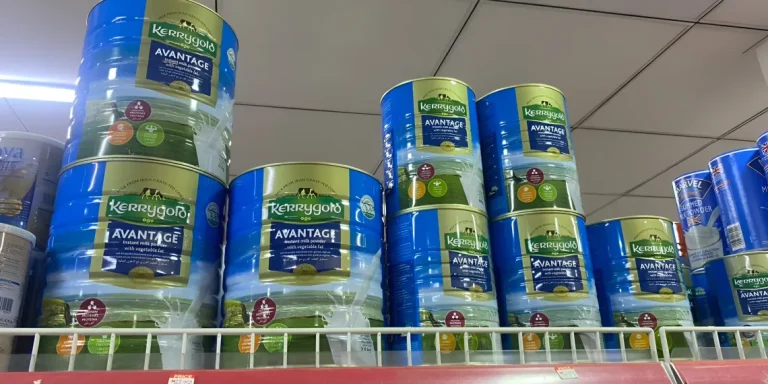
The Nigerian dairy market is predominantly filled with fat-filled milk powder (FFMP), which is created by blending skimmed milk powder with vegetable fats after stripping away much of the original milk fat.
These products are widely available in supermarkets, large open markets, makeshift roadside grocery shops, and are even hawked by street vendors at dawn, becoming a staple in many Nigerian households.
However, many Nigerian consumers are unaware that in Europe—where these products are largely manufactured—FFMP is not classified as milk. The same applies in Nigeria, where regulators do not categorize FFMP as milk, unlike whole milk powder or skimmed milk powder.
This investigation has revealed that FFMP is marketed and sold as milk in Nigeria, leading many to misunderstand the difference between genuine milk and this alternative.
Chisom Odirichukwu, a 35-year-old shop owner in Wuse Market, Abuja, expressed surprise and reluctance to accept that the milk powder sachets in his store are not considered real milk. Having run a dairy product shop for years, he believes the distinction between FFMP and other powders like whole milk is mainly a matter of taste, not quality.
Odirichukwu noted that some customers prefer whole cream milk while others consistently choose fat-filled milk products, pointing to packs of Milksi and Kerrygold on his shelves.
He argued that claims that FFMP is not real milk stem from ignorance about dairy products. “It is best for people trying to stop weight gain,” he said, dusting off some milk packs. “It just depends on preference,” he added.
Interviews with various traders, wholesalers, and retailers across Nigeria revealed that FFMP is often viewed as a healthier option for weight management, with its popularity partly driven by high demand and lower cost due to inflation. Obesity affects 27.6% of women and 14.5% of men in Nigeria, contributing to FFMP’s appeal.
Some traders mistakenly believe that FFMP contains no fat, while others think it was initially intended for children but has become popular among adults due to rising dairy prices.
However, this fat content claim is incorrect. According to the Codex Standard for Milk Powder and Cream Powder, whole milk contains at least 26% milk fat. In contrast, FFMP in Nigeria comprises at least 28% vegetable fat, typically sourced from palm or coconut oil.