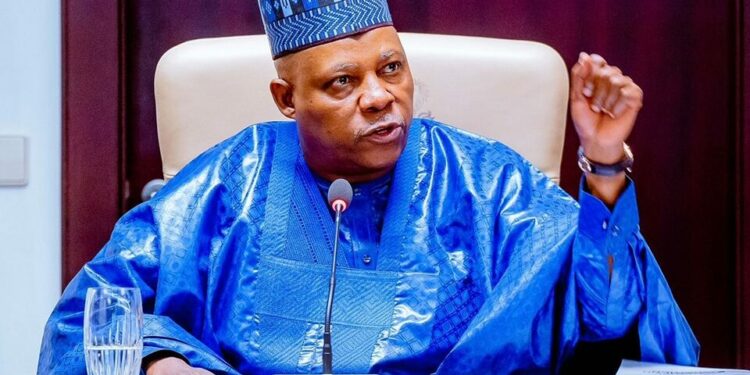
On Wednesday, Vice President Kashim Shettima assured donor organizations and development partners that the current administration will continue to fully support initiatives aimed at alleviating the plight of individuals displaced by conflict and natural disasters both within and outside Nigeria.
Shettima provided this assurance during a courtesy visit from a delegation of the United Nations High Commissioner for Refugees (UNHCR), led by Assistant High Commissioner for Operations, Mr. Raouf Mazou, at the Presidential Villa in Abuja.
The Vice President commended the UN for its extensive support over the years, stating, “I understand the crucial role the UN system has played. Your assistance has been invaluable in addressing the challenges we face in the northeast and across the nation.”
He reiterated President Bola Tinubu’s commitment to ongoing collaboration with key stakeholders to address critical issues impacting the well-being of displaced persons. “We are committed to supporting our African brothers and sisters displaced by conflict and natural disasters. Our partnership with the UN will only grow stronger. We are open to new ideas for collaboration, particularly those that focus on sustainable resettlement of refugees. Embracing sustainable solutions will help us avoid donor fatigue,” Shettima emphasized.
Shettima also acknowledged the complex interplay between ecology, economy, and insecurity in the Sahelian region. He noted, “The challenges in the Sahel are compounded by endemic poverty and the effects of climate change. While our situation is unique, President Tinubu is working tirelessly to address these issues and diversify the nation’s economic base.”
Mr. Mazou praised Nigeria’s exemplary treatment of refugees, highlighting the role of host communities in the resettlement process. “I want to express our gratitude to Nigeria for accommodating a significant number of refugees, primarily from Cameroon. The host communities have played a vital role in this process,” Mazou said.
He also mentioned plans to access World Bank facilities for refugees and host communities to enhance support and promote sustainable development strategies. “We will explore these resources to provide additional support, particularly to aid the host communities,” Mazou added.